Frameworks
Our frameworks
Security for mine sites and mineral supply chains is judged against international frameworks. Our operations are built on four of them.
Voluntary Principles on Security and Human Rights
2000Established in 2000 for the extractive and energy sector. Implemented today in more than 150 countries and embedded in 15 industry performance standards.
| A written human rights policy commitment | A policy you can hold us to, handed to the client |
| A human rights risk assessment | A site by site mapping, kept current |
| Community consultation | A documented dialogue with neighbouring communities |
| Operational measures to prevent and mitigate | Site procedures, trained and checked |
International Code of Conduct for Private Security Service Providers
2010 · ICoCA 2013Concluded in September 2010 through a process facilitated by Switzerland. Its oversight body, the ICoCA, was launched in September 2013 and is based in Geneva.
| Selection and background checks on personnel | No agent assigned without a documented prior check |
| Written rules governing the use of force | Rules that are trained, applied and verifiable after the fact |
| Continuous human rights training | A shared foundation, re-assessed over time |
| An accessible grievance mechanism | A route of recourse open to third parties, outside the chain of command |
| Incident reporting and investigation | An incident register, open to audit |
ISO 18788, management system for private security operations
2015 · amendement 2024International standard published in 2015, first edition, confirmed in 2021, with amendment 1 issued in 2024. This is the standard against which a private security company is certified by a third party.
| A documented management system | Written procedures, not spoken custom |
| Analysis of context and stakeholders | A setup calibrated to the site, not one model for all |
| Competence and clearance of personnel | Qualified agents, and the proof of their qualification |
| Control of suppliers and subcontractors | The same standard along the whole chain |
| Internal audit and management review | A control cycle, not a one-off declaration |
OECD Due Diligence Guidance for Responsible Supply Chains of Minerals
Zones de conflit et à haut risqueDue diligence framework for minerals from conflict-affected and high-risk areas. Global in scope, all minerals, with refiners and smelters as audit control points for tin, tungsten, tantalum and gold.
| 1. Establish strong management systems | A written chain of custody, from site to handover |
| 2. Identify and assess risks | Route and context analysis before every flow |
| 3. Design and implement a response strategy | Control measures, and tracking of their effect |
| 4. Carry out independent third-party audit | Control points open to audit |
| 5. Report publicly | A due diligence report handed to the client |

What they have in common
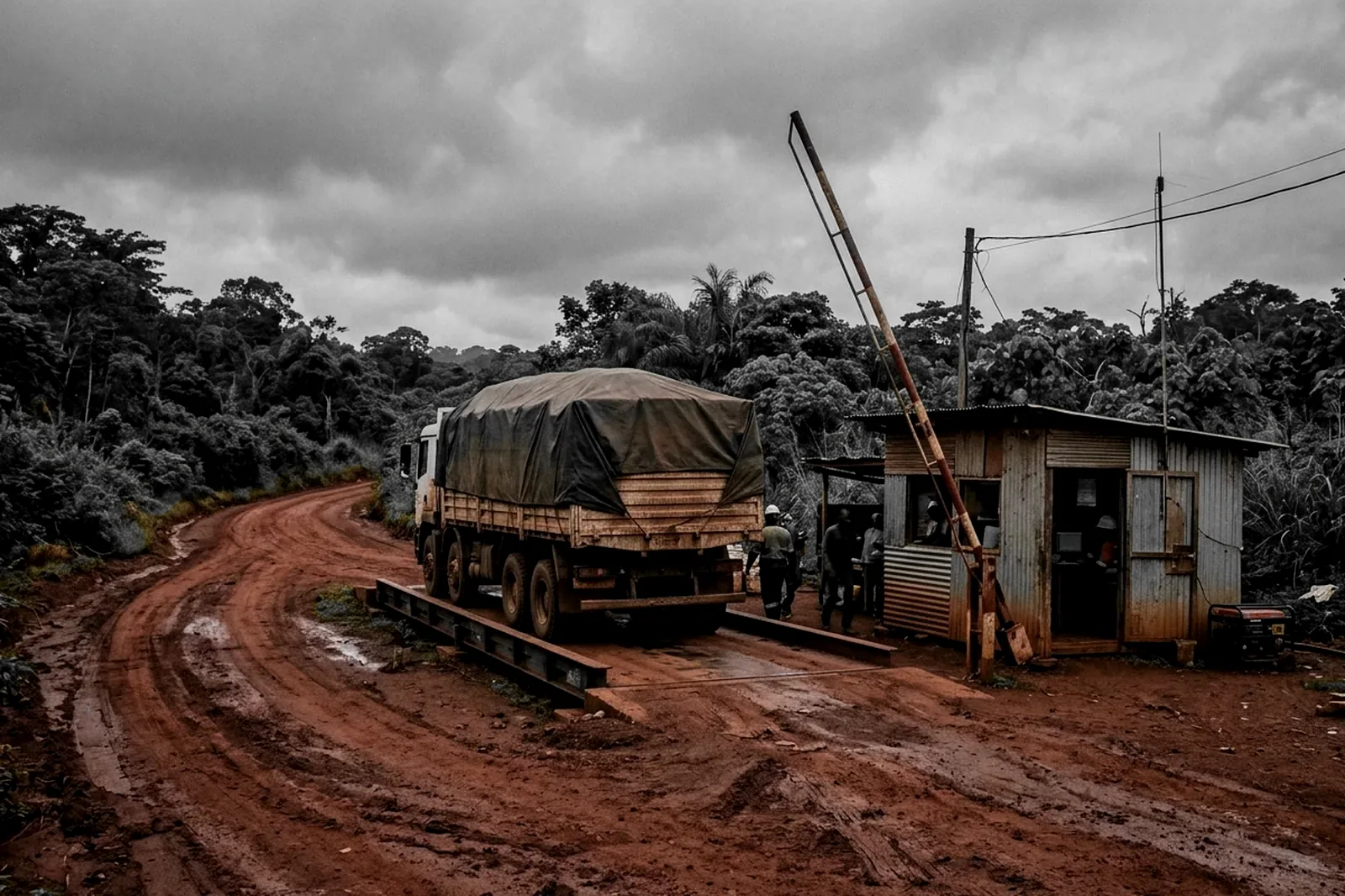
They all ask for the same thing: that what is done be written down, that what is written be trained, and that what is trained be verifiable by a third party. That is how we work.
Our operations are conducted in compliance with local law.
Let's talk about your site.
Tell us where the site is, what needs protecting and by when. We come back to you with a first read.